- Typology
- Hospitality
- Components
- Beach Amenities, Beach Club, Entertainment / Sports, F&B, Lodge / Nature Reserve, Marina / Yacht Club, Resort Community, Single Family, Spa / Wellness
- Attributes
- Island, Placemaking, Sustainability, Waterfront
- Scale
- 400 acres, half retained as green space, 8 neighbourhoods, 93-slip marina, Marina Village, spa, children's center, Beach Club, Casino Royale compound


no roads only ocean and wind
Place
Place: Steep remoteness
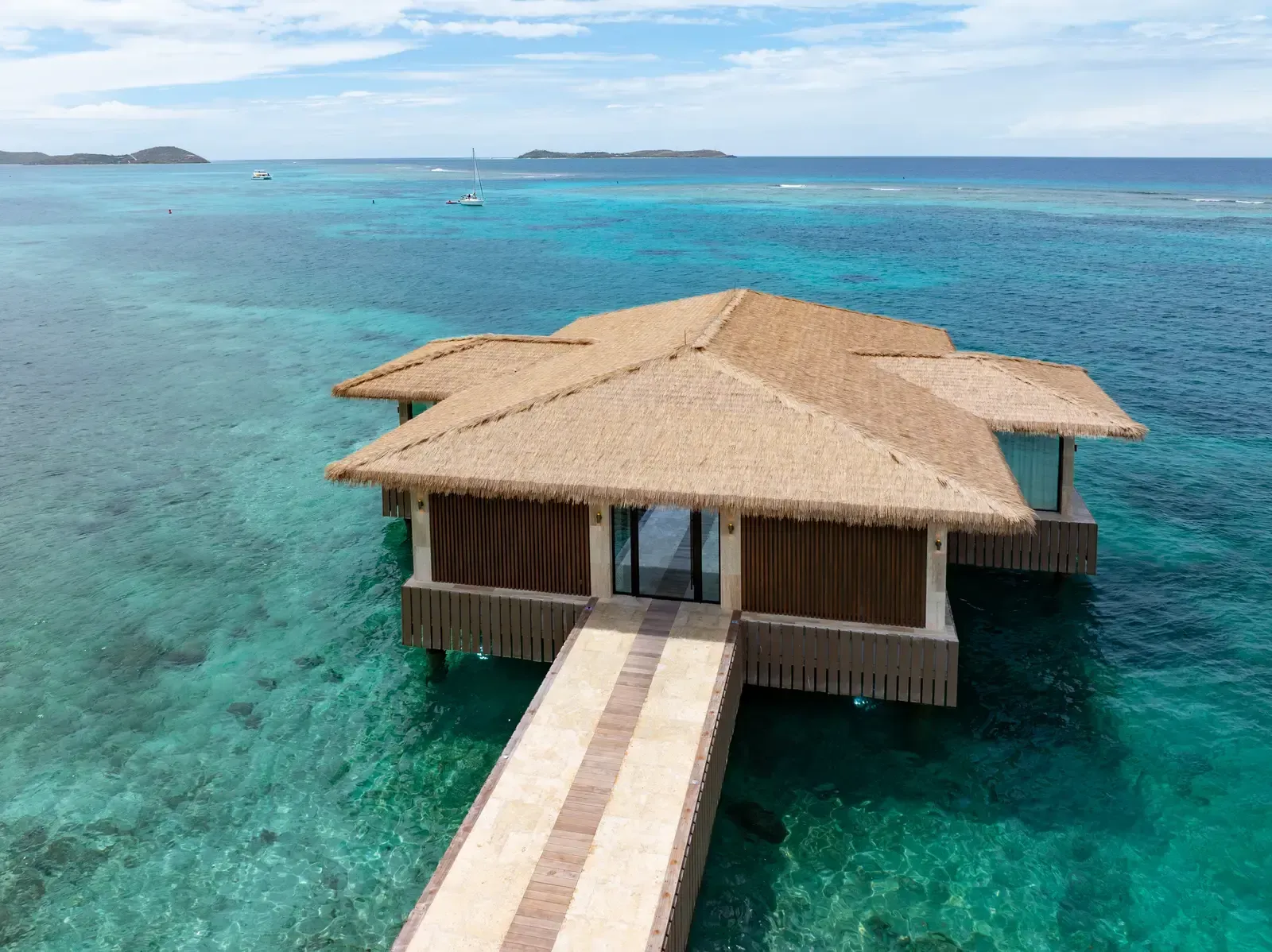
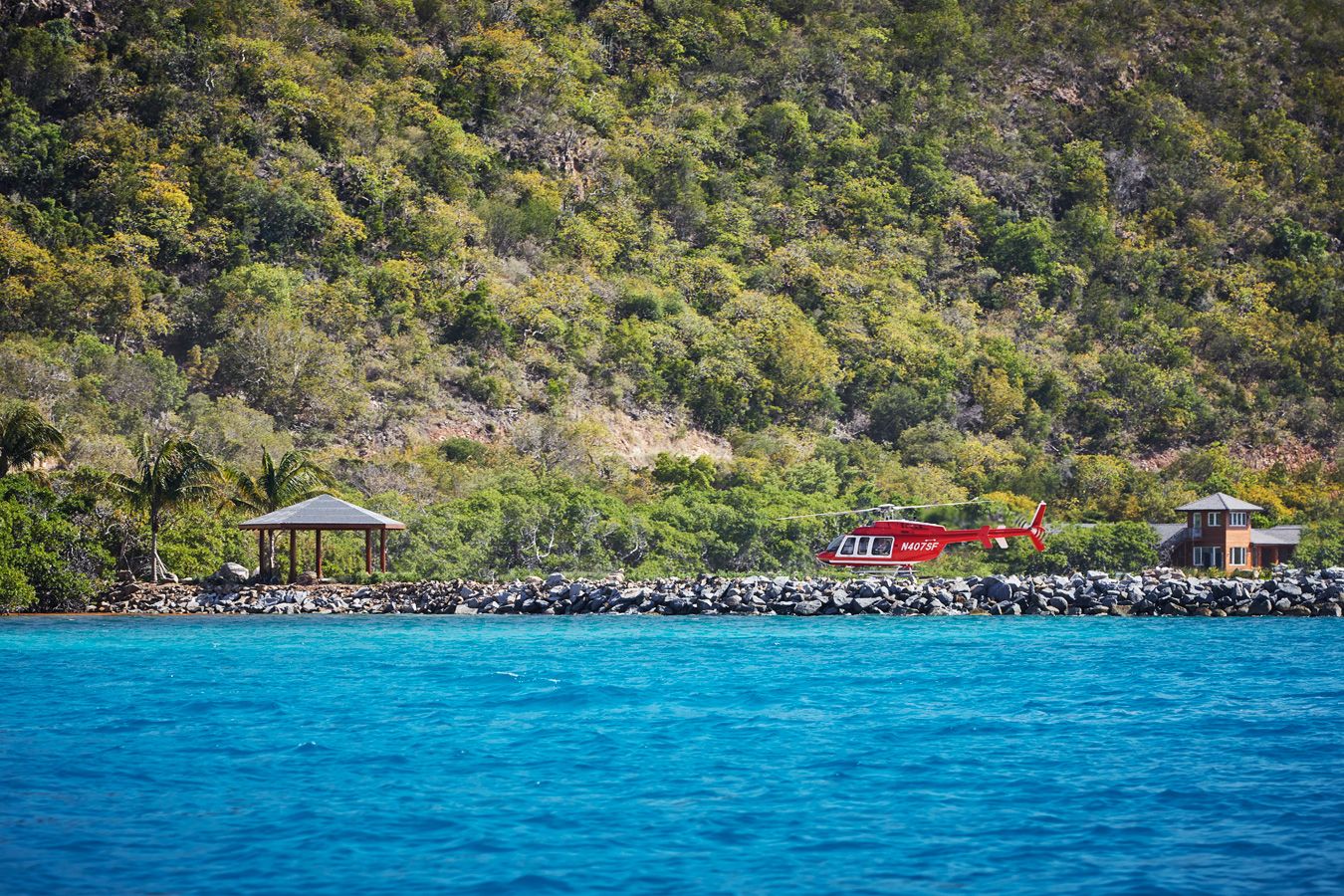
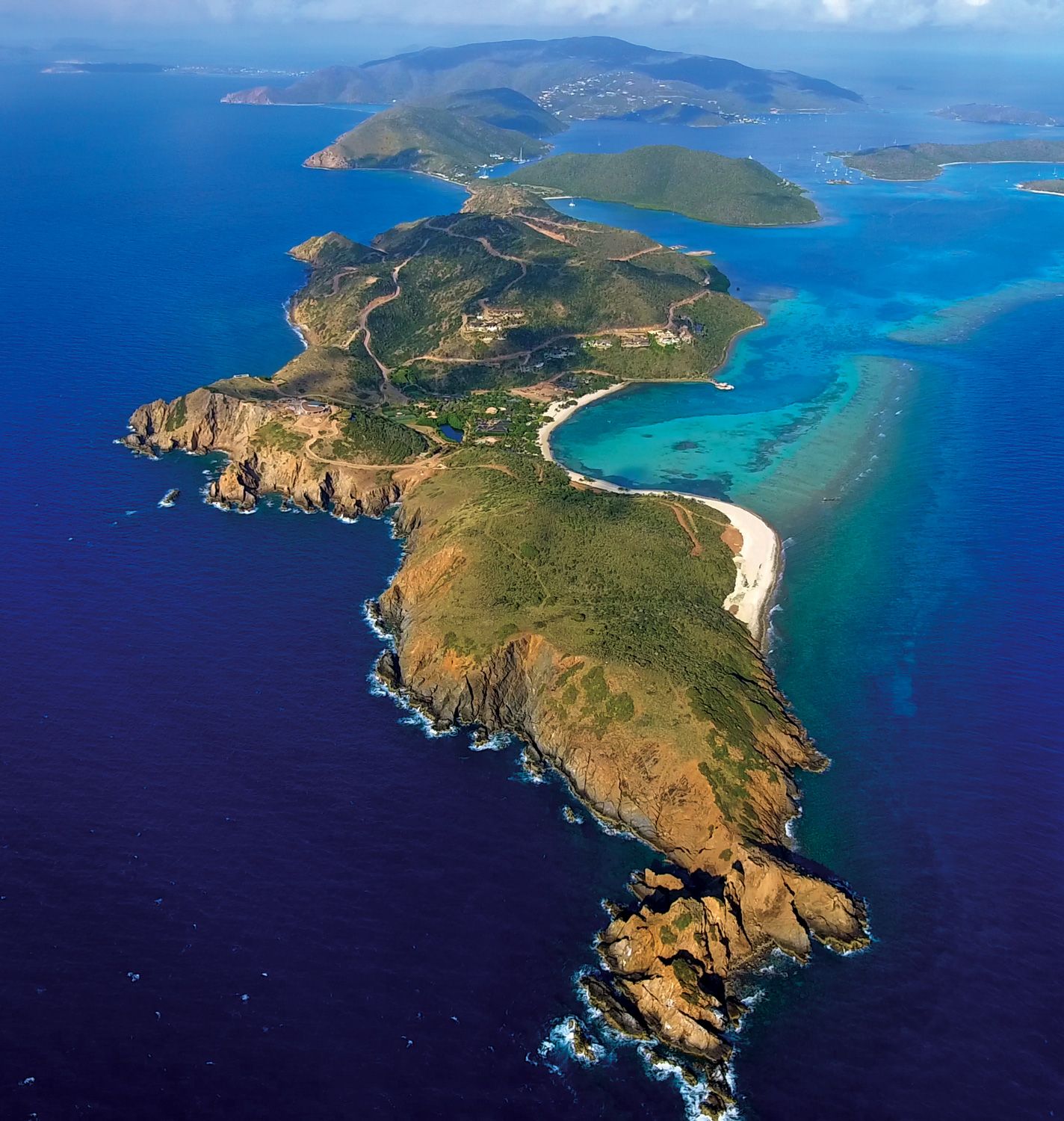
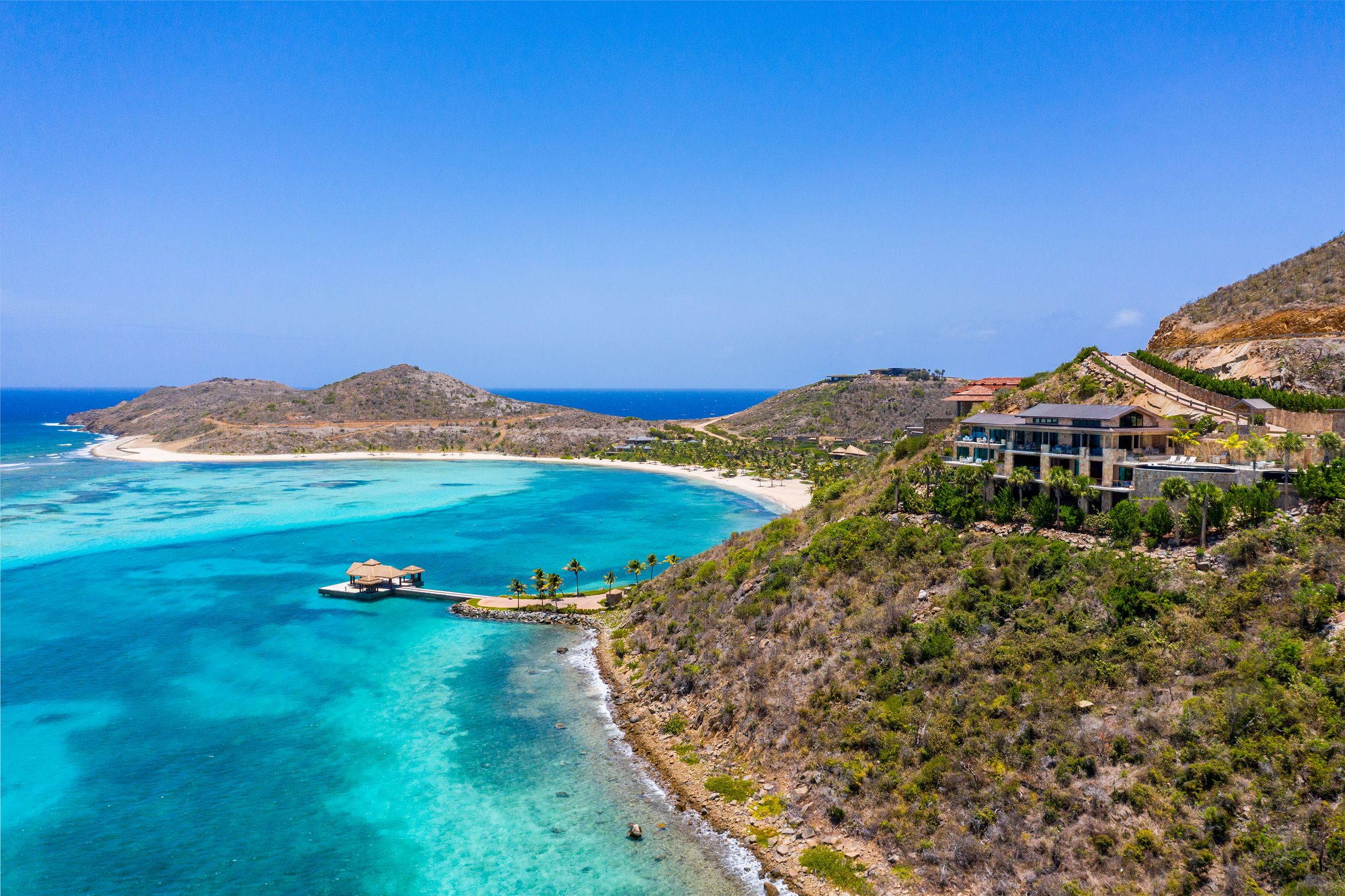
Oil Nut Bay occupies the eastern tip of Virgin Gorda, some 160 hectares of ridge and hillside falling to the water at the outer edge of the British Virgin Islands. No road reaches it, and everyone arrives by boat across North Sound or by helicopter. That single fact governs the place: what cannot easily reach it also cannot easily crowd it. The marina is the front door.
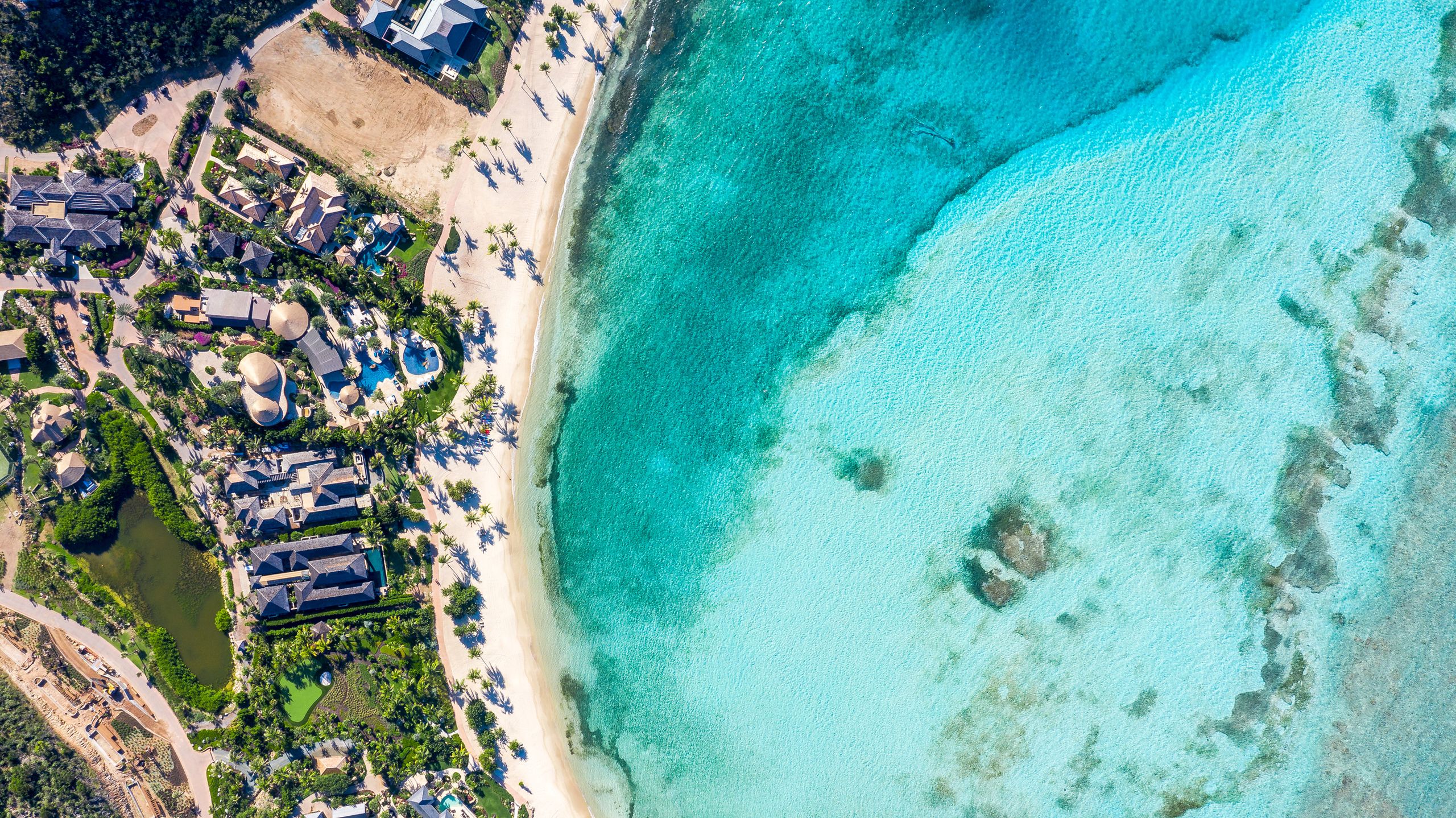
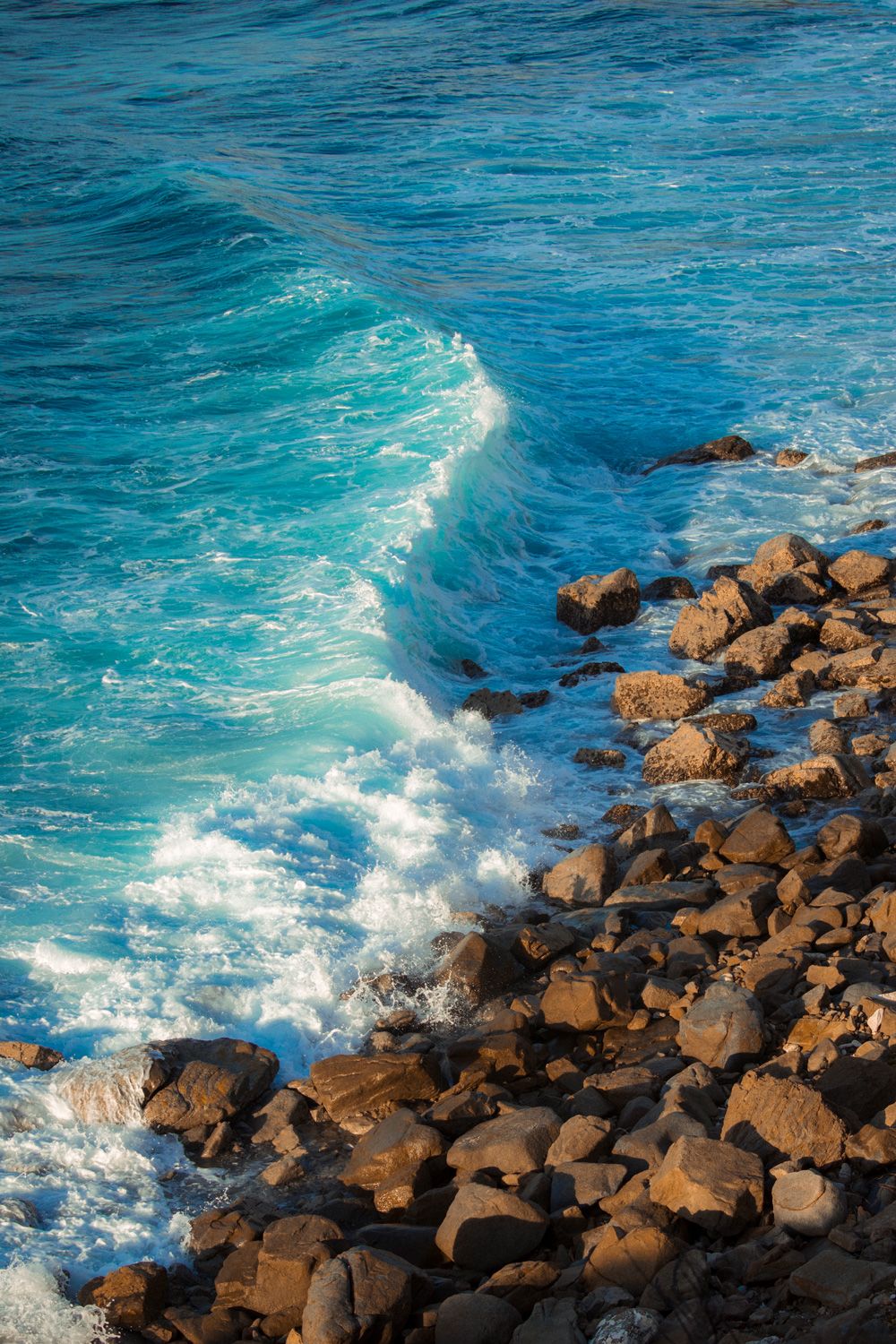
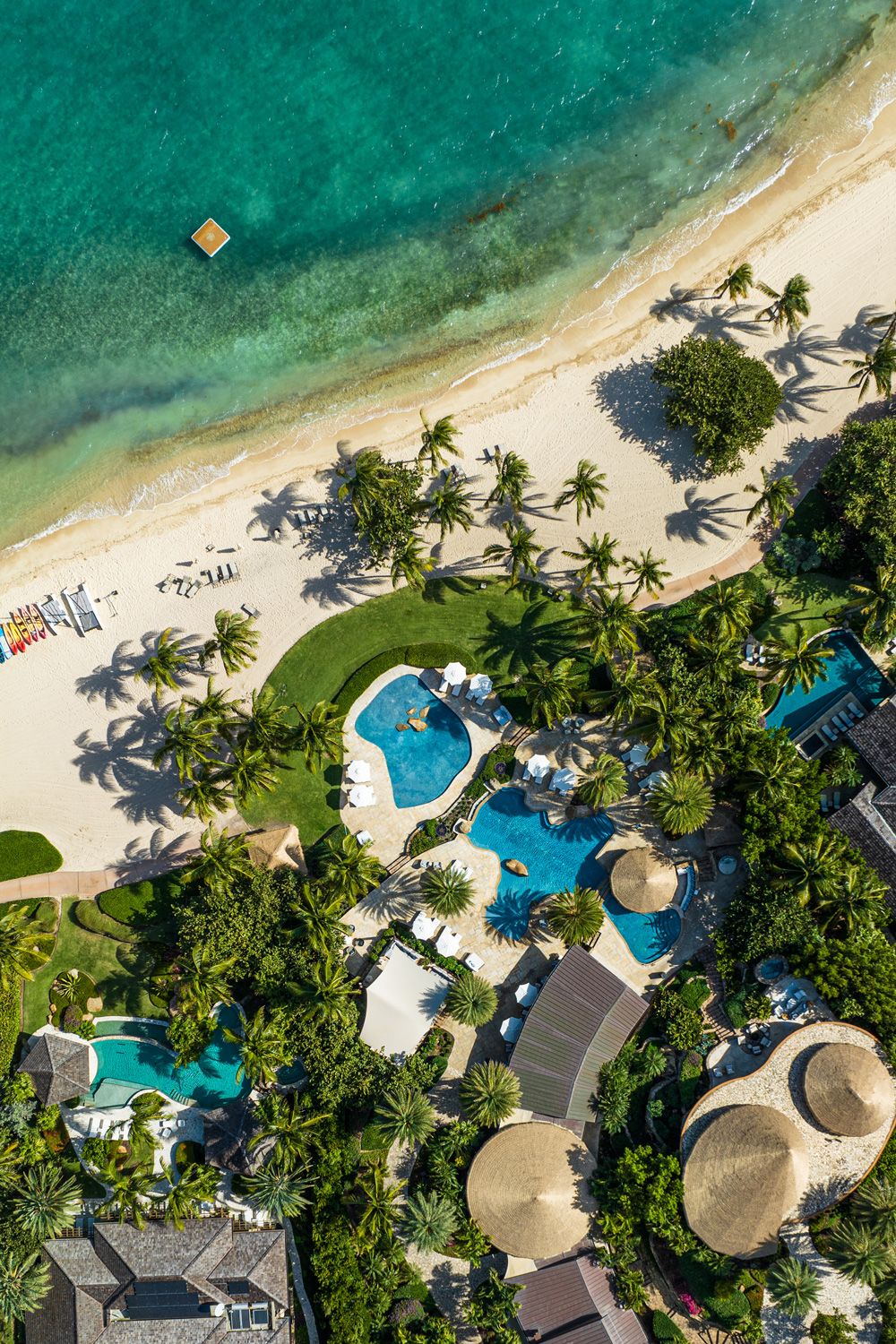
The land is steep, folding into coves and rising to ridgelines that look across to Necker and Anegada. Half of it was set aside as green space and has stayed that way.
Context
Context: Both sides of the community
David V. Johnson came to the British Virgin Islands in 2004 with four decades of development behind him and forty-three master-planned communities to his name. What he wanted at Oil Nut Bay was a place families could return to across generations, held in balance with the nature around it, and that aim set the terms for everything that followed.
OBMI joined in 2009, working across bespoke residences, the Marina Village, the spa, the Nut House children's centre and, most recently, the Beach Club. Owners have since commissioned OBMI directly for houses of their own, so the practice has worked on both sides of the community, for the developer who planned it and for the people who live in it.
Challenge
Challenge: A question of density
The pressure on a site like this is to build to its capacity. A Caribbean hillside of this size, with water on three sides, could carry a great deal of development, and each additional villa is worth something. The counter-pressure is that people come for the emptiness, and building too much would destroy the asset being sold. OBMI's task was to find the density at which the place still feels unpeopled, and then to place every structure so that it disappears.
Approach
Approach: Neighbours out of sight
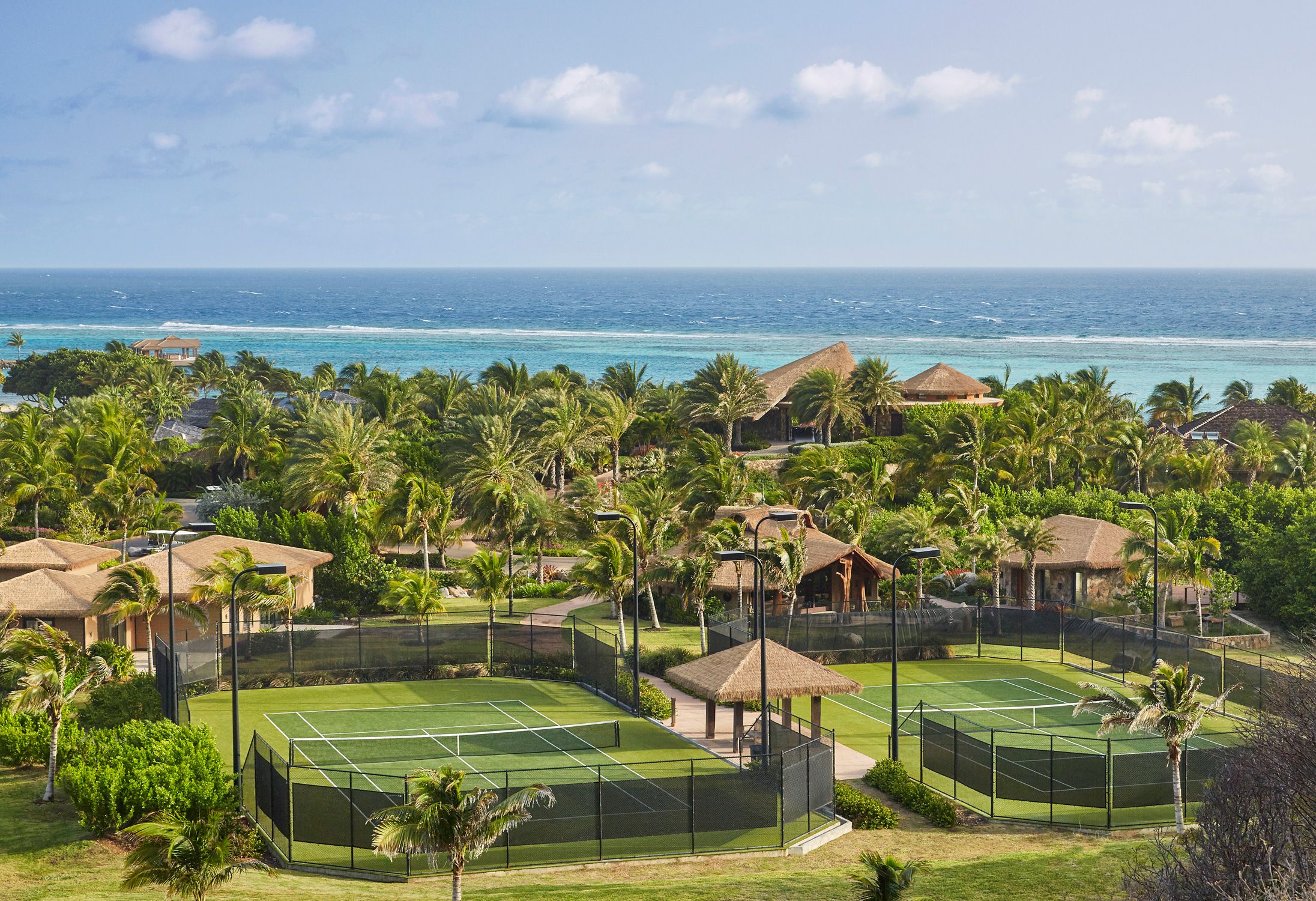
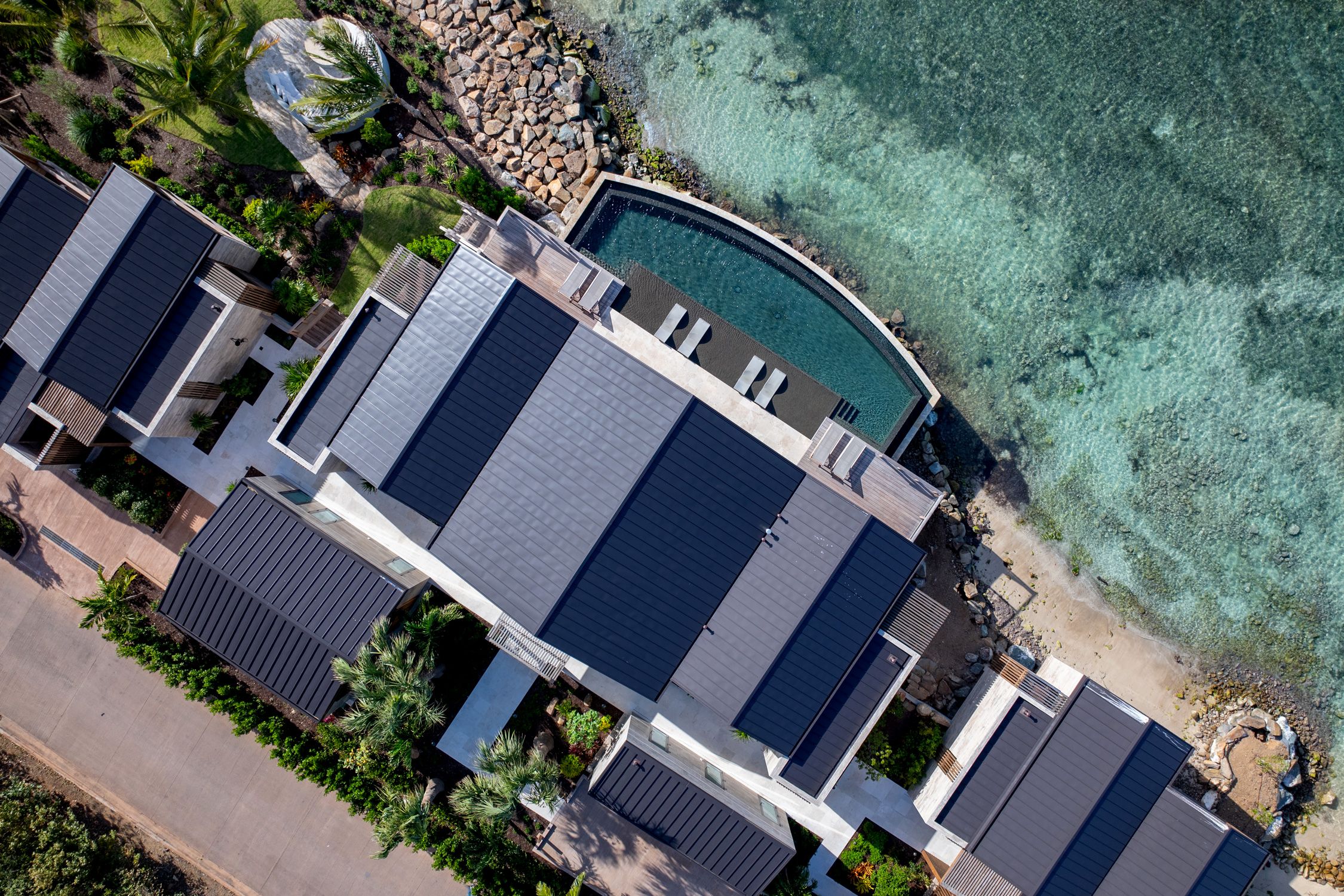
The answer was low density and dispersal. Residences sit across eight neighbourhoods at generous separation, tucked into hillside and vegetation so that neighbours are rarely visible from one another. The buildings follow the contours they found, which keeps the natural drainage running and leaves the standing flora intact.
Character
Character: Boulders from the site
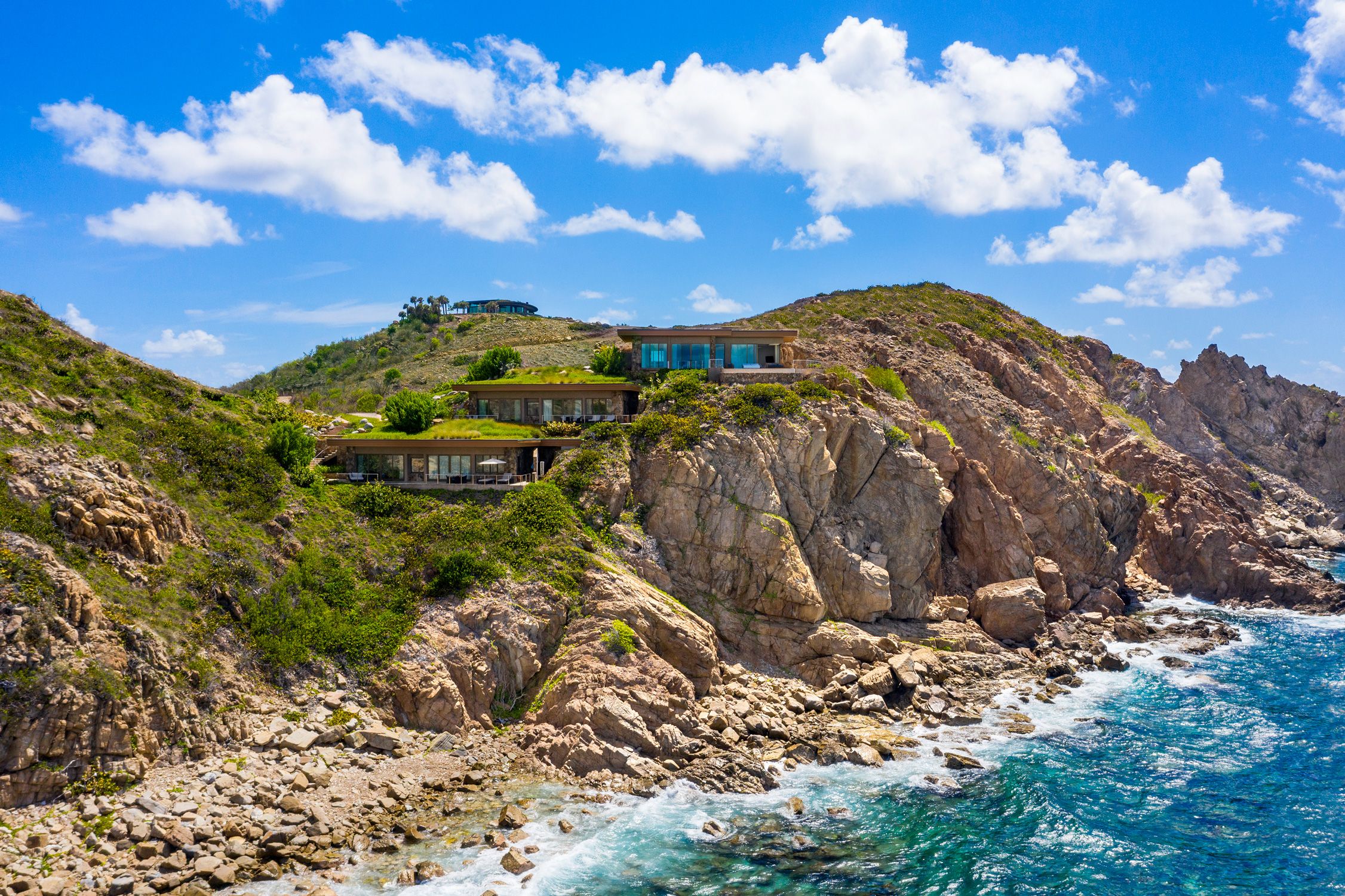
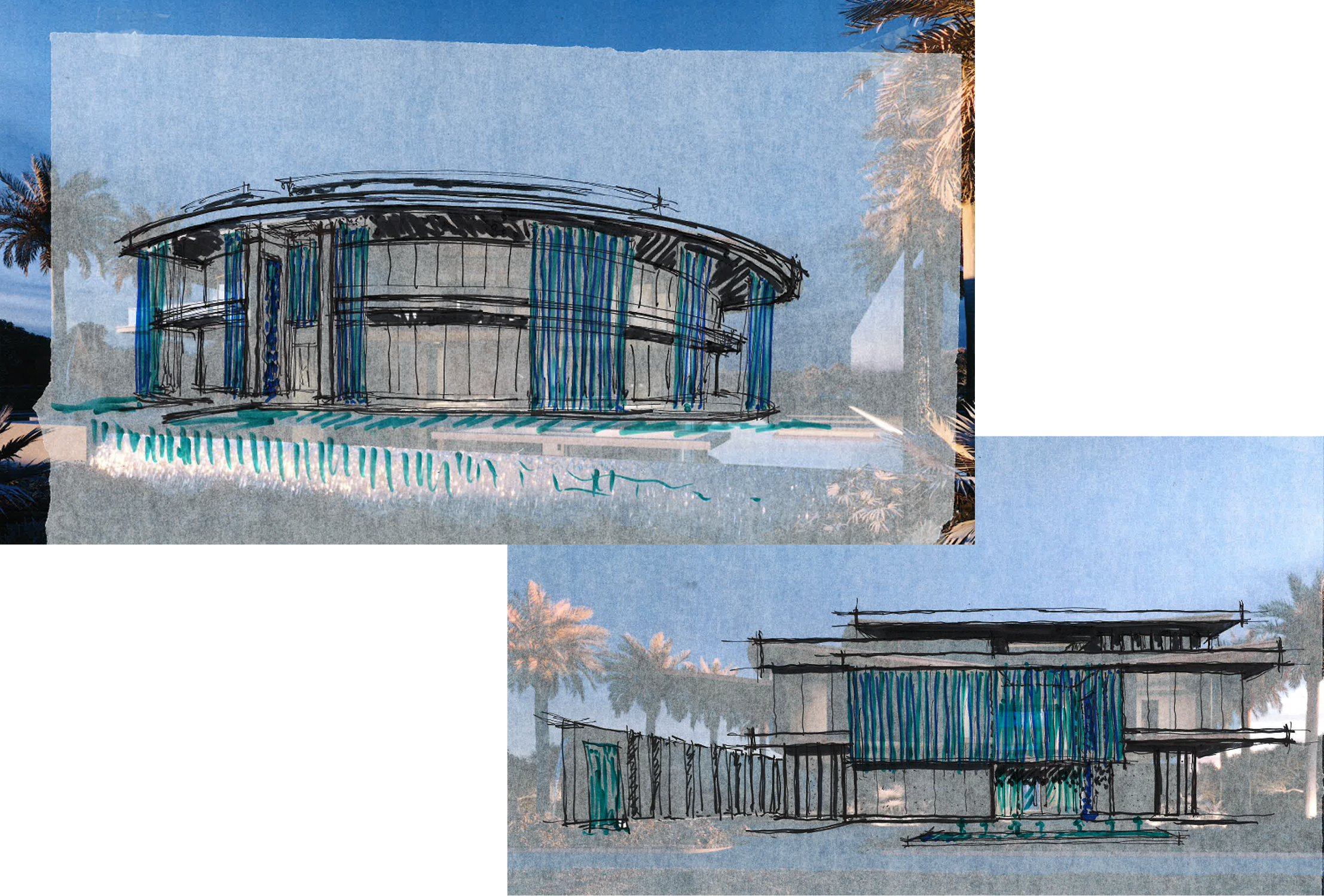
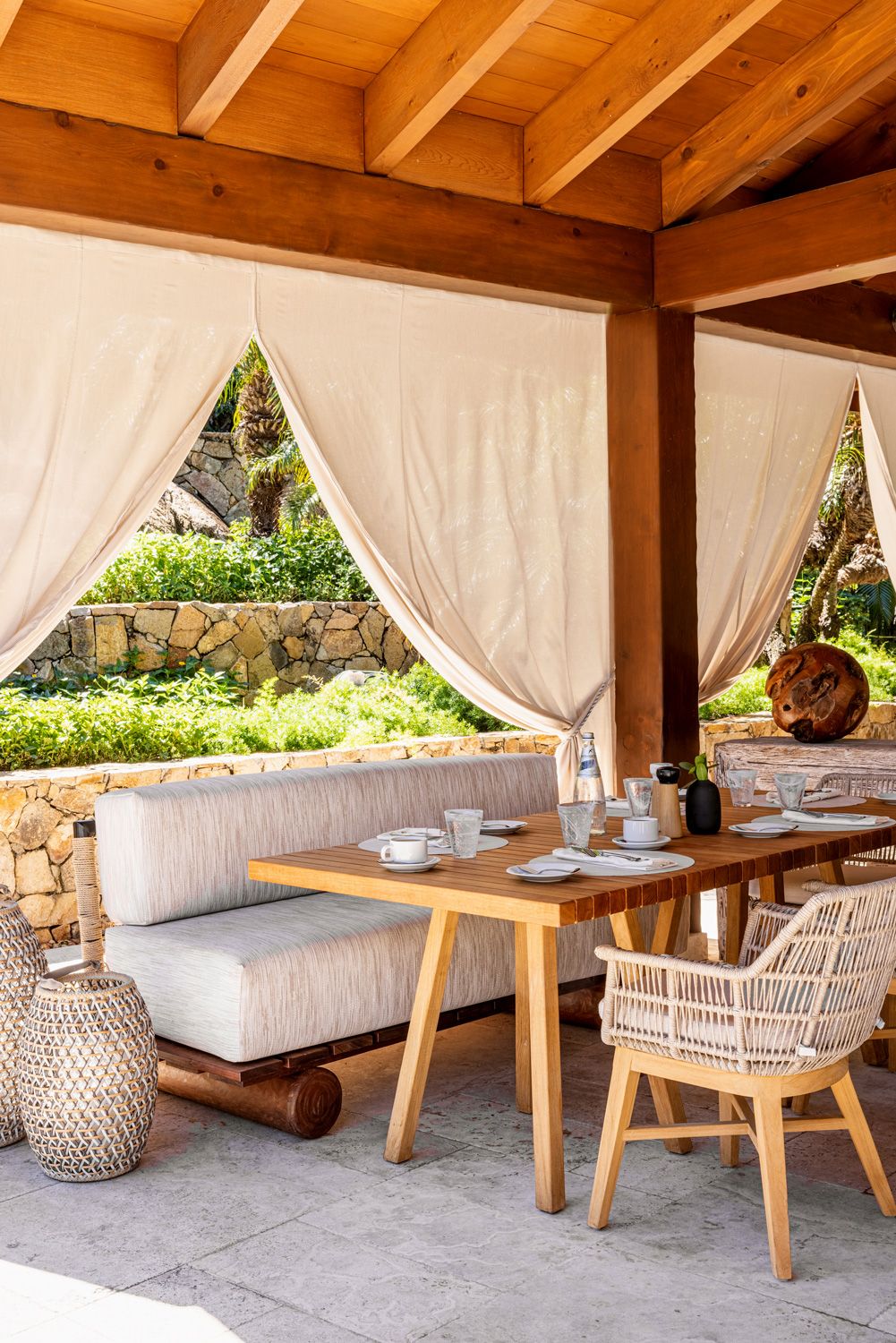
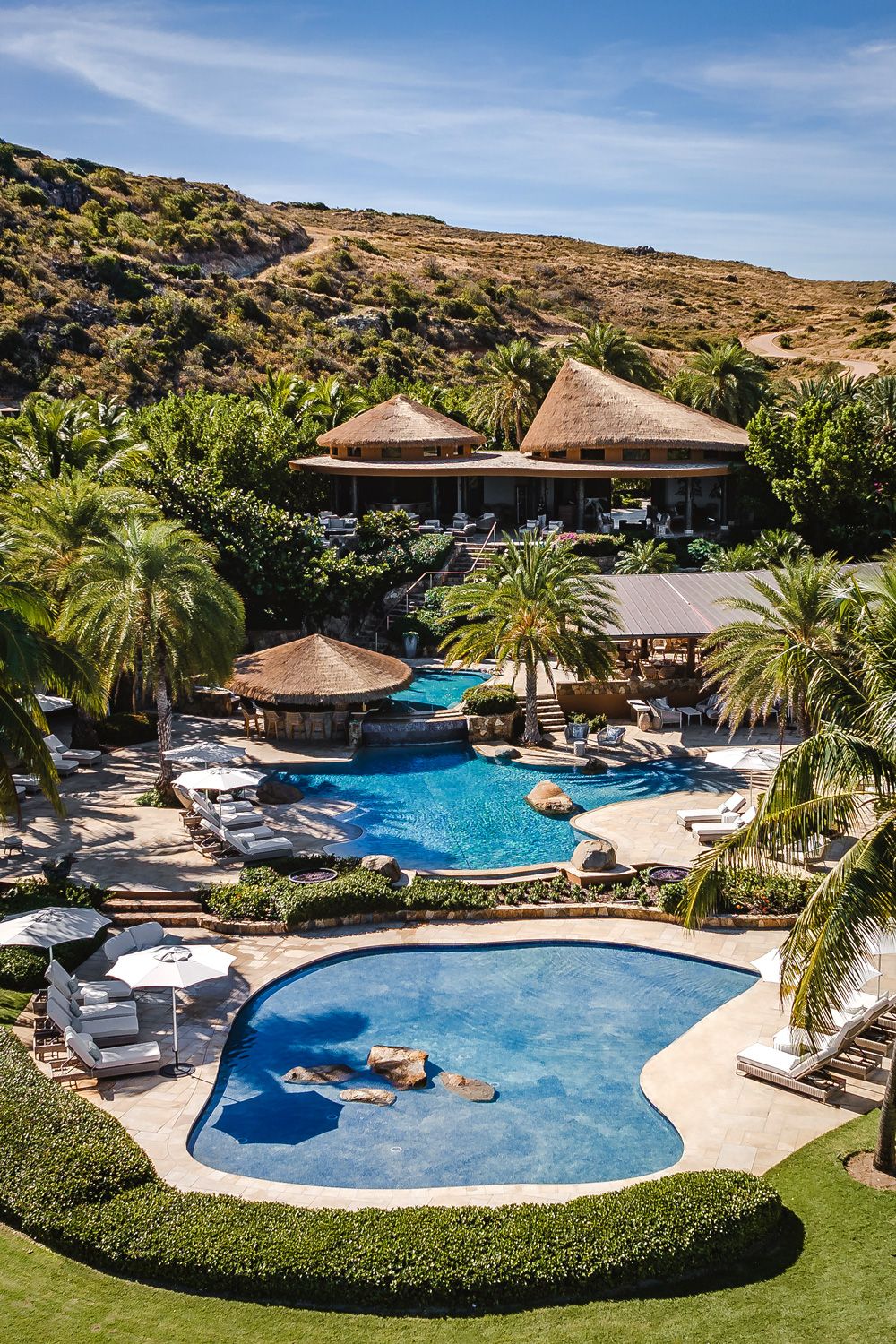
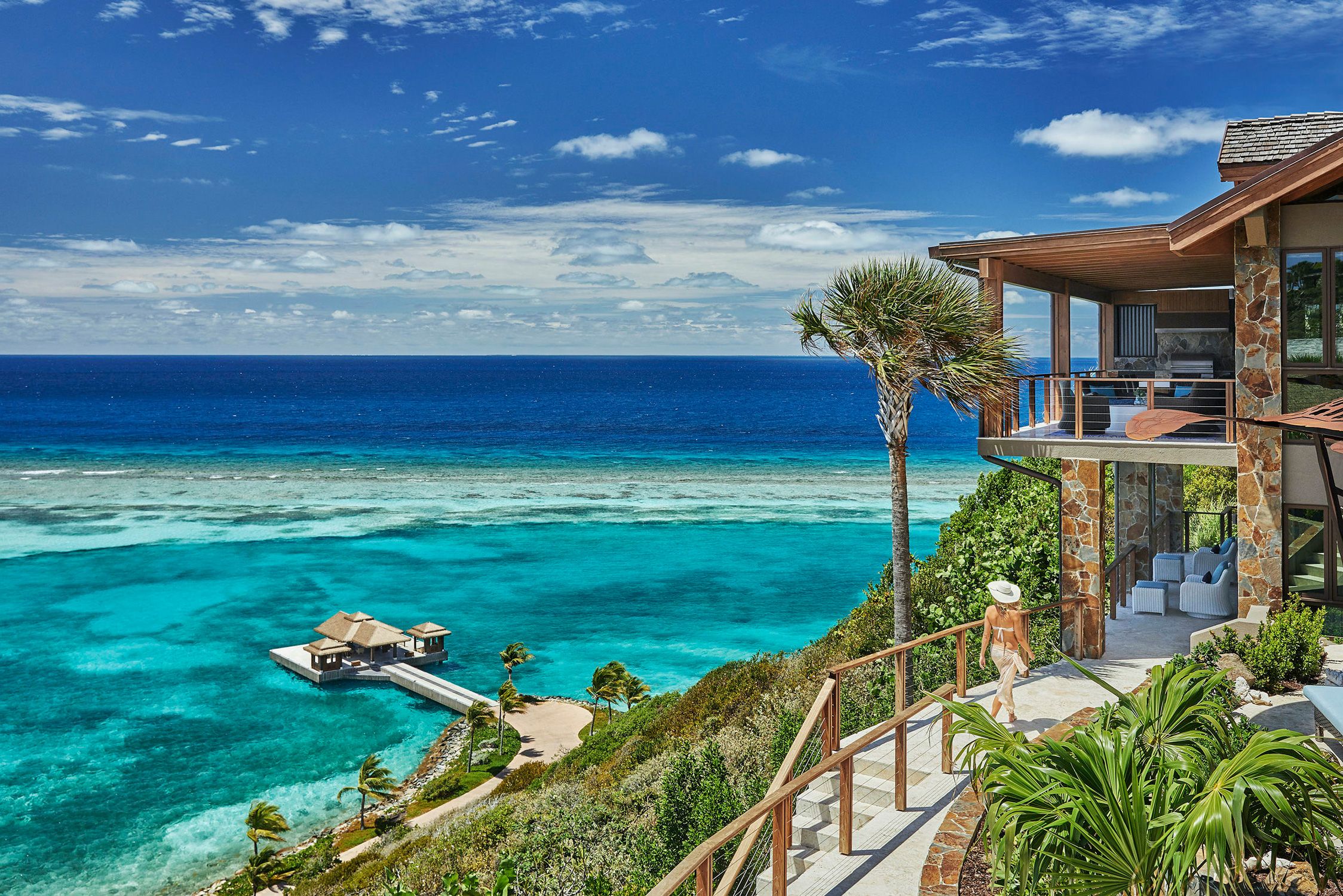
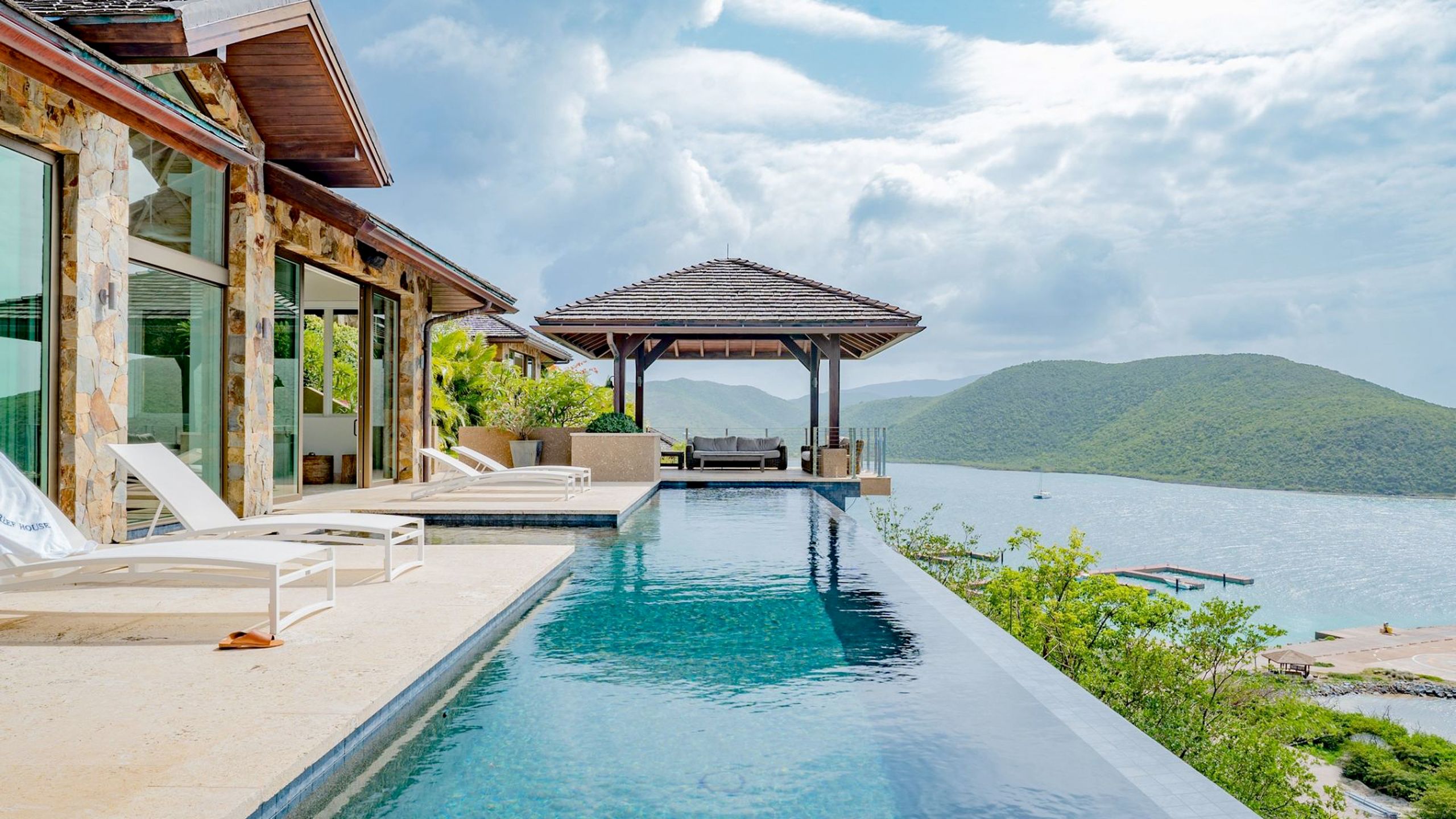
The fabric was drawn from the island. Exteriors use large stones and boulders quarried on site, with copper roofs and earth-toned palettes, and many carry living green roofs that read from above as continuous with the hill. Island masons and carpenters worked the native stone and the hardwoods, so the regional craft sits in the structure of the buildings. No two residences repeat: each was drawn for its own site and its own owner, which is why the community reads as accumulated over time.
“We combine art and science, amazing architecture, interior design and engineering with spectacular design, and have developed a community that fits into the spectacular physical features that exist at Oil Nut Bay.”
Experience
Experience: Arriving by water
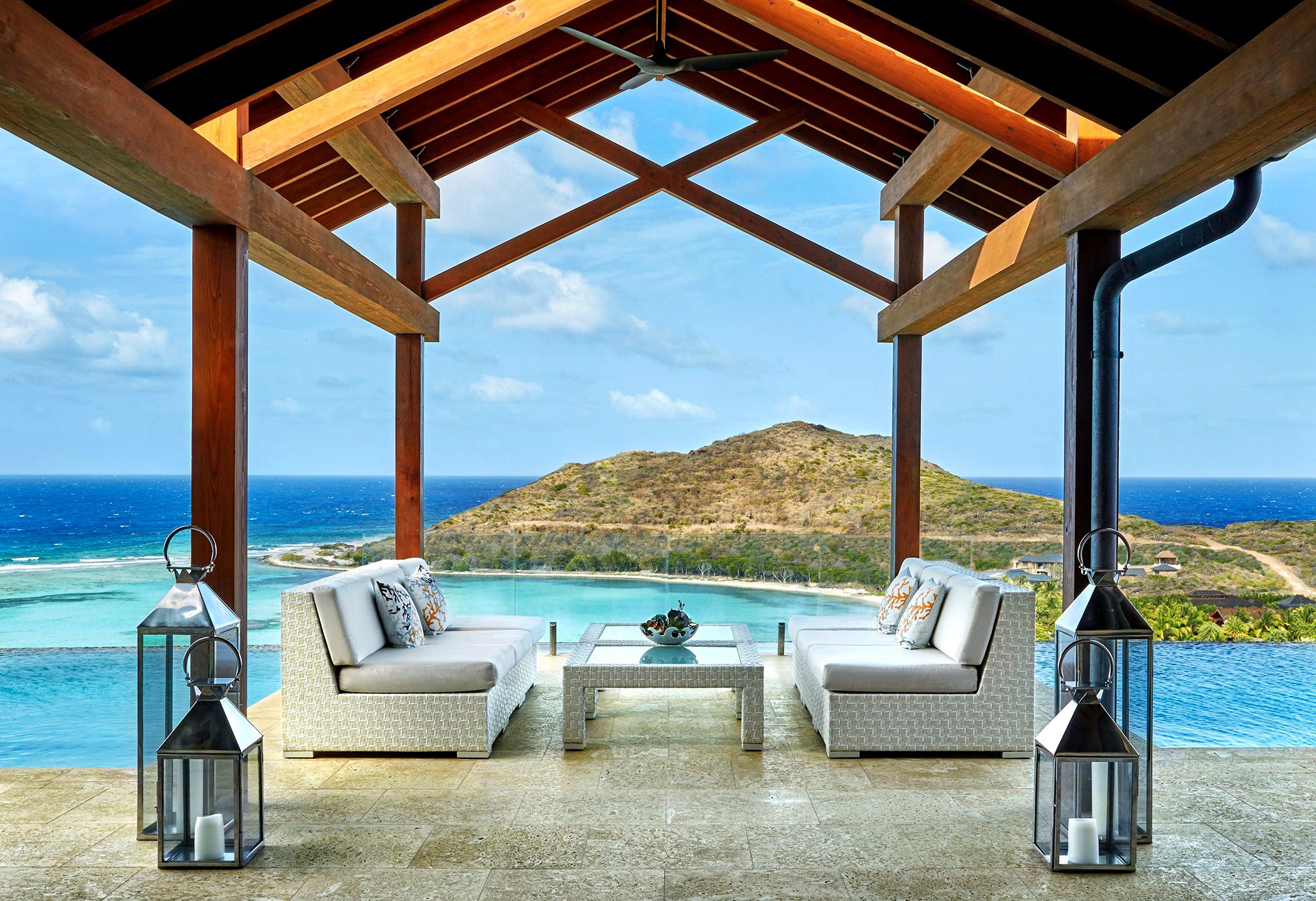
The approach is by boat, and the place assembles on the way in: the marina first, then the hillside above it with houses half-hidden in green, and roofs planted so thoroughly that a building can be missed altogether. Guests move by electric cart on paths winding between neighbourhoods.
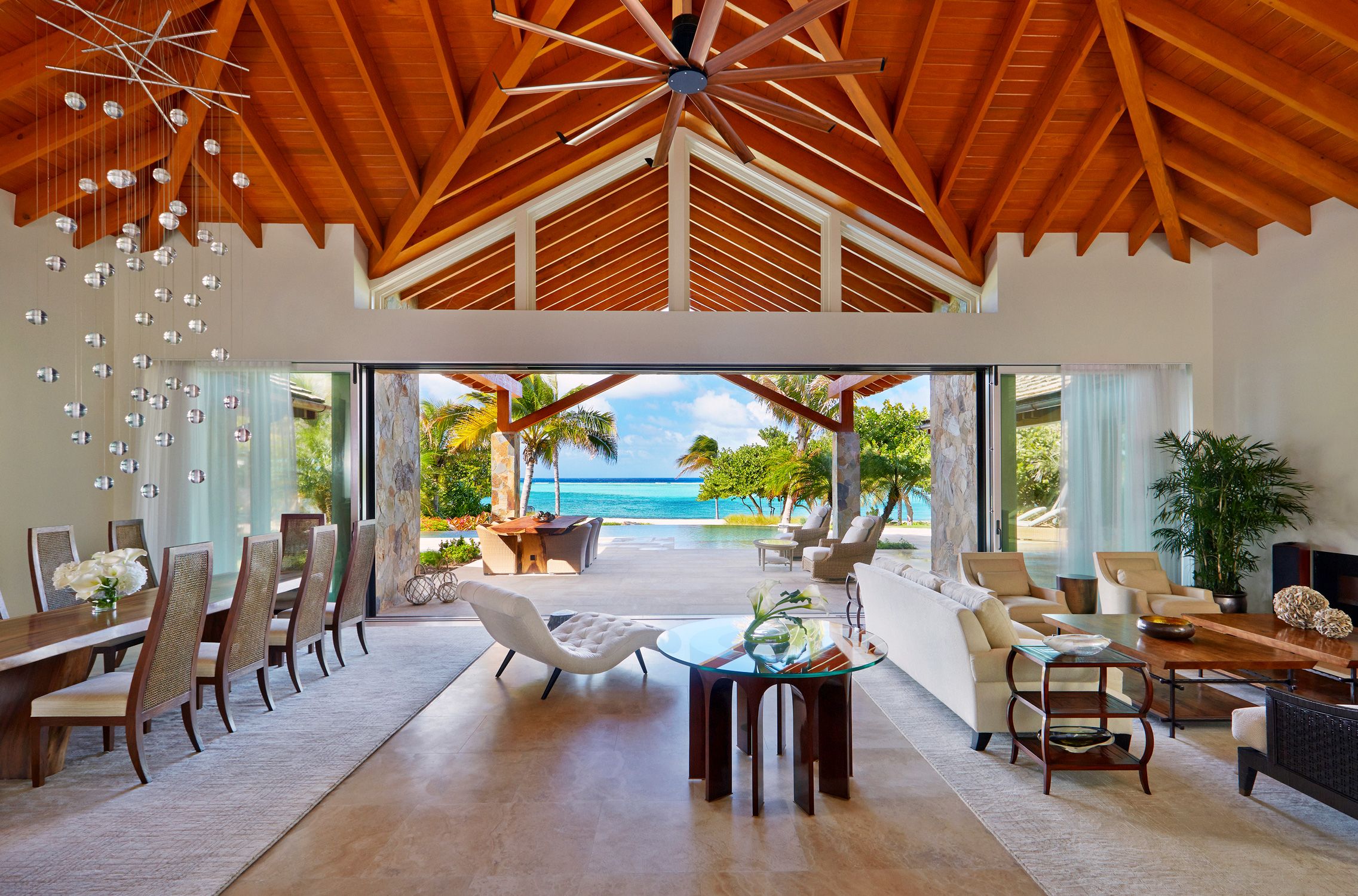
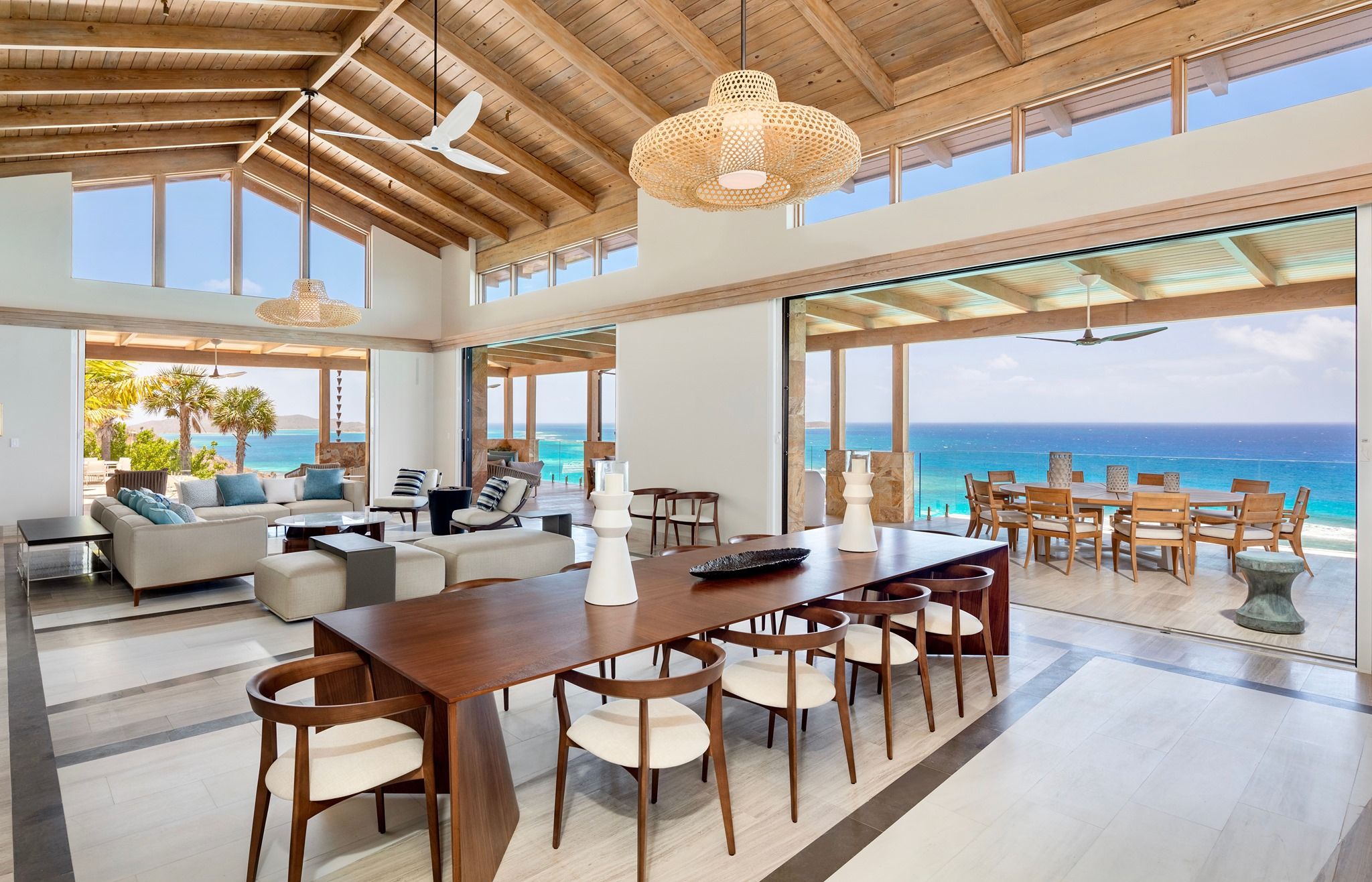
Inside, the buildings are open to the weather. Ceilings rise high, glass walls telescope back into their frames, and the trade winds come through the rooms and out the other side, so the air is almost always moving. The line between a living room and a terrace stops meaning much.
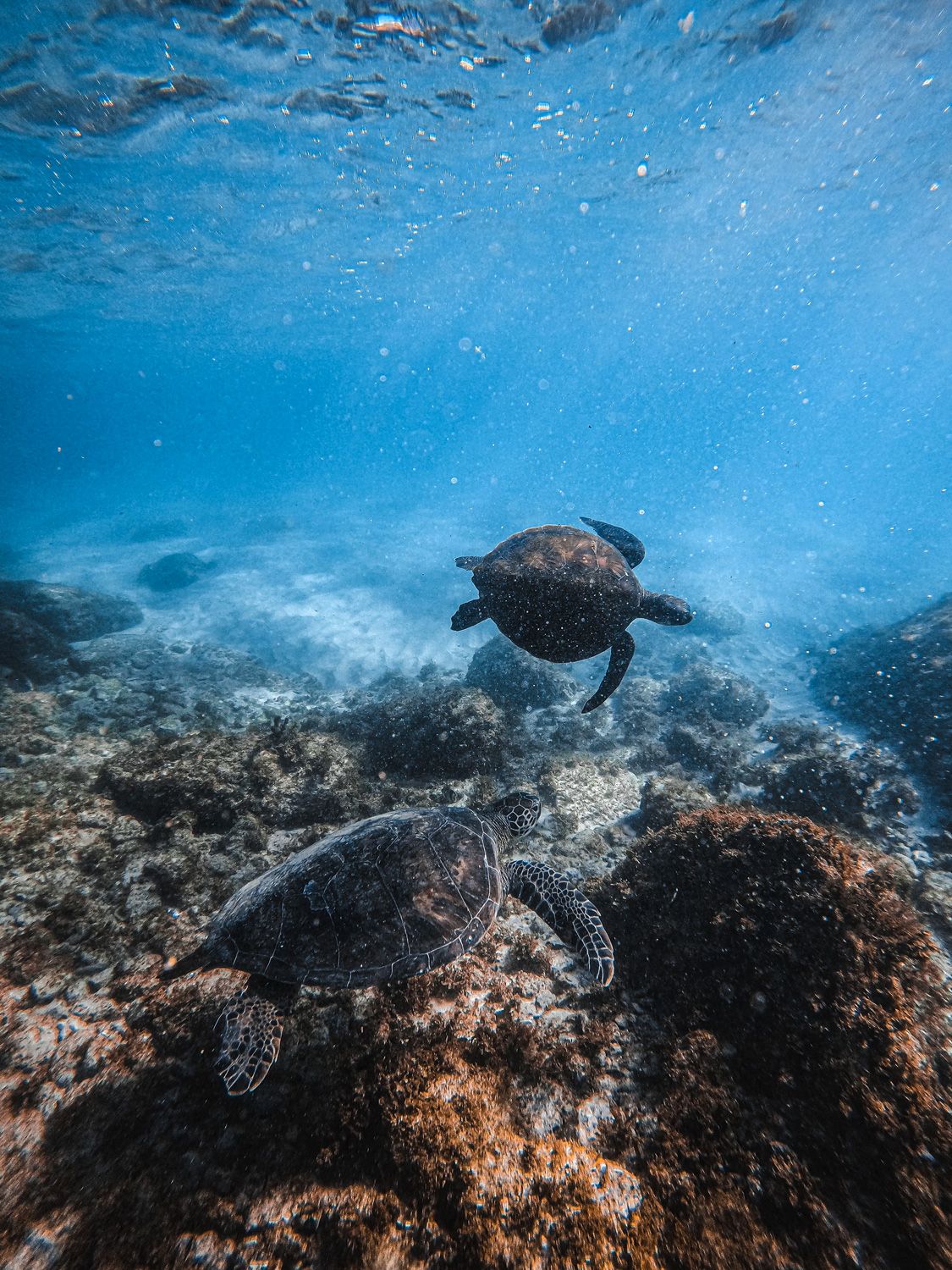
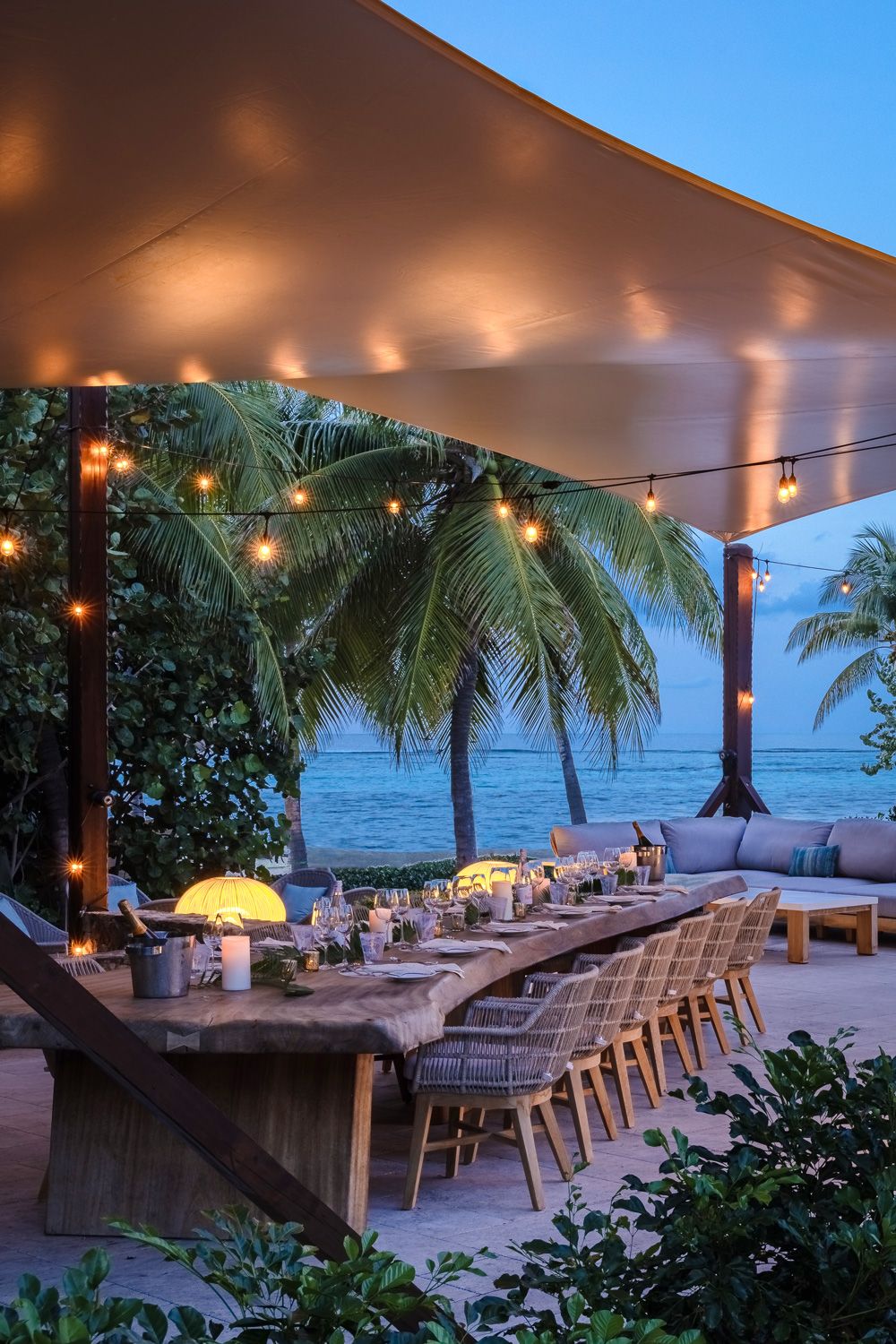
Turtles and stingrays can be snorkelled directly off the beach. Rescued horses live in a barn on the property. The Beach Club runs quiet while the Marina Village fills in the evening, so the community holds both a hush and a gathering place.
Outcome
Outcome: Seventeen years, one island
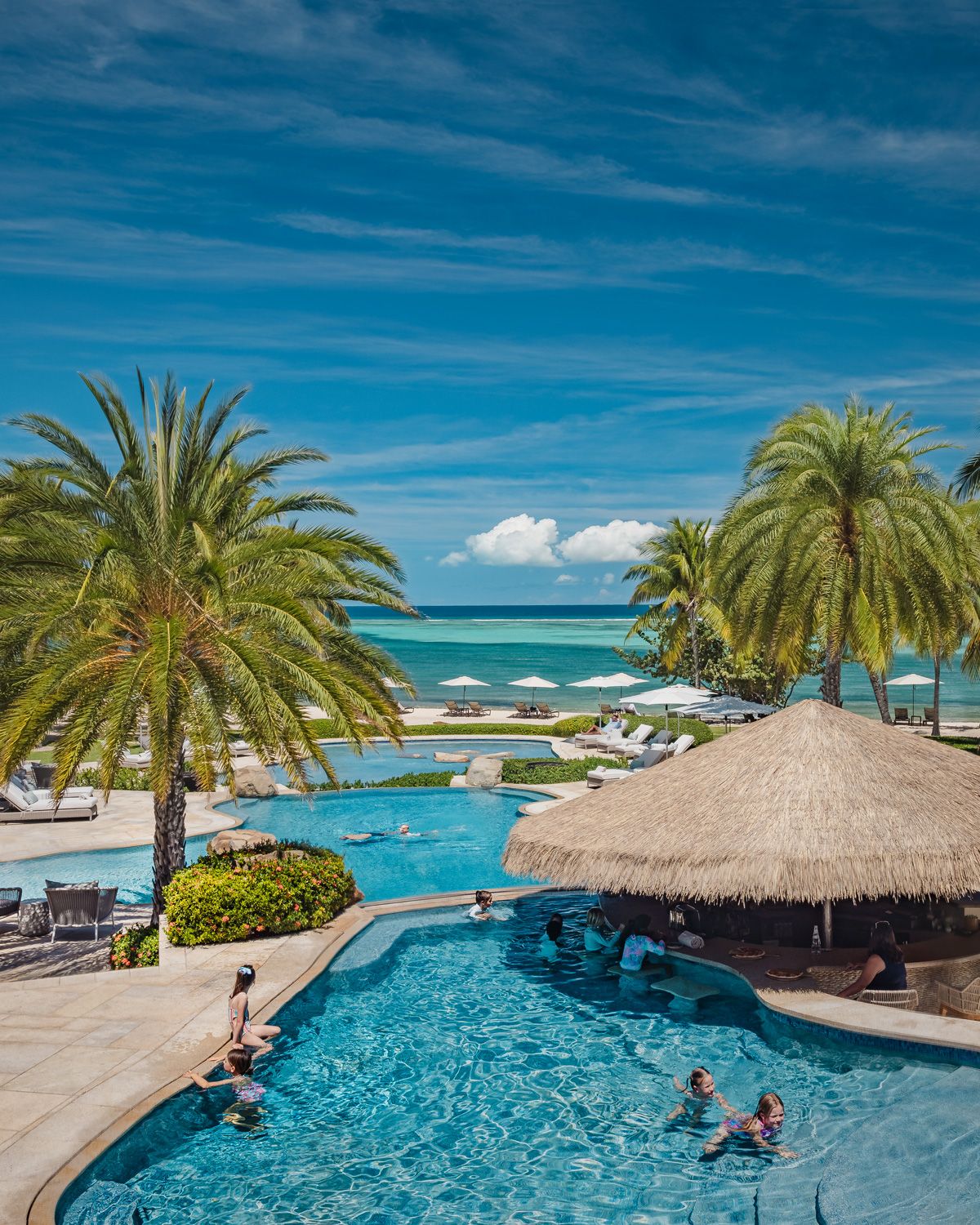
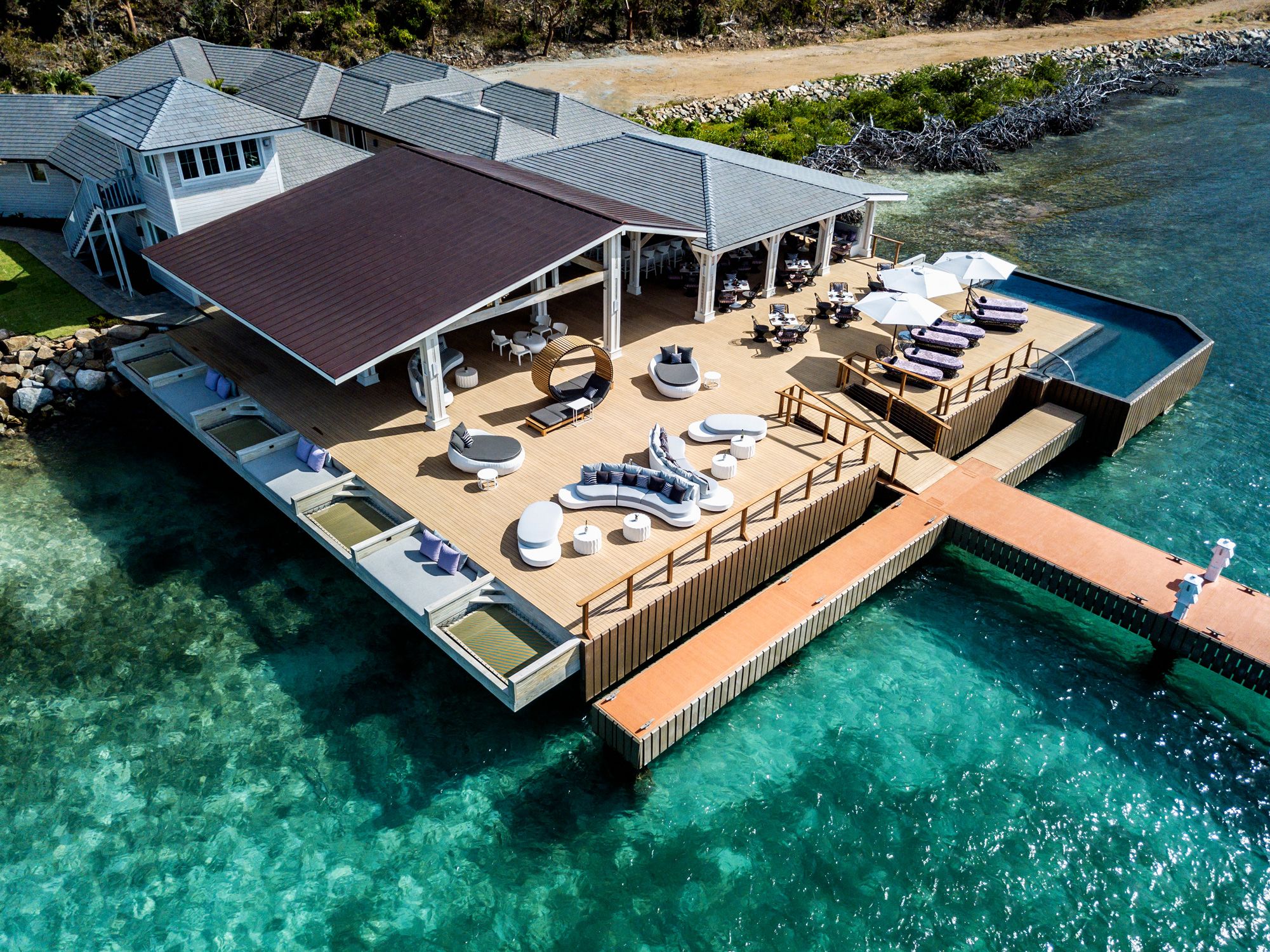
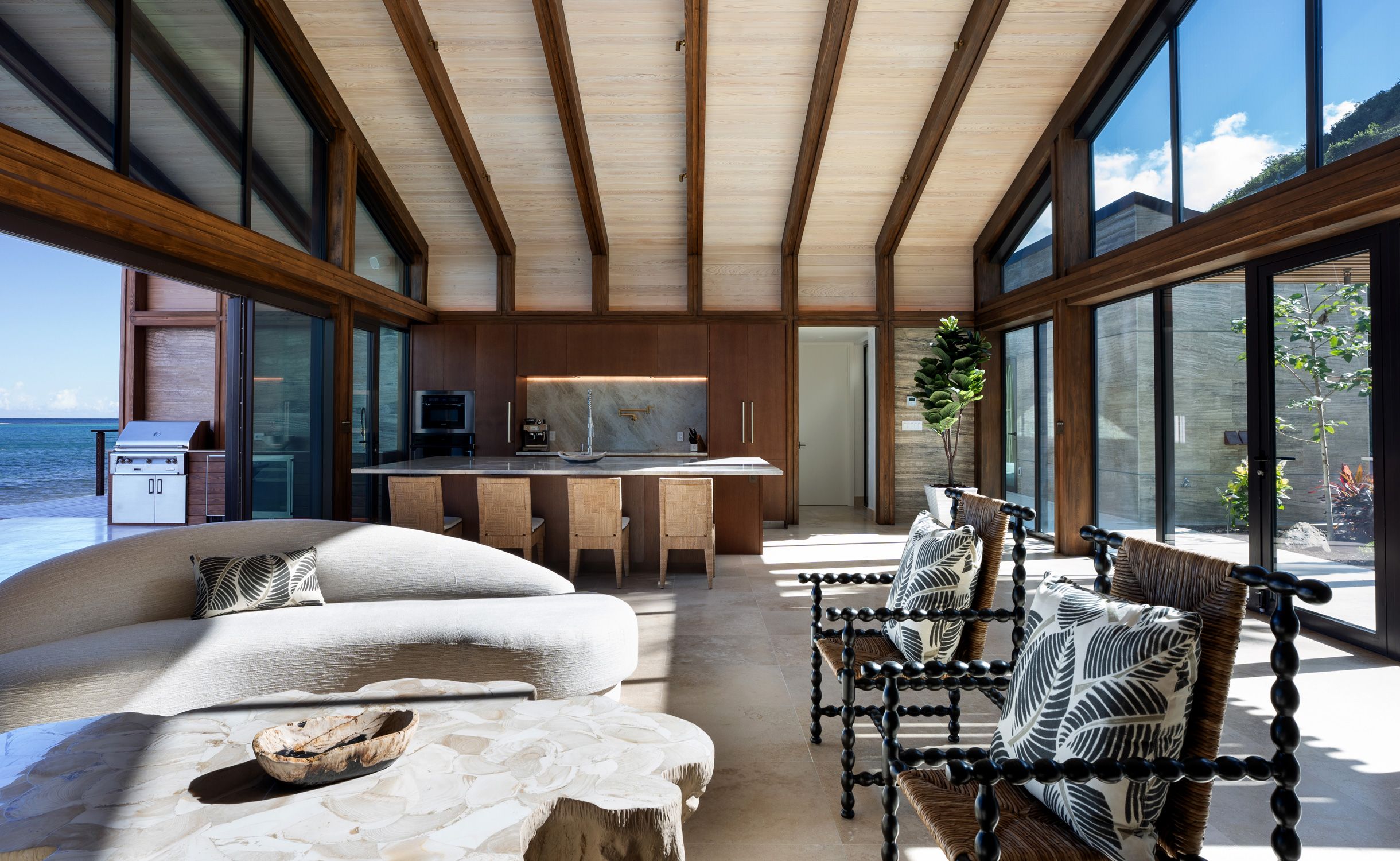
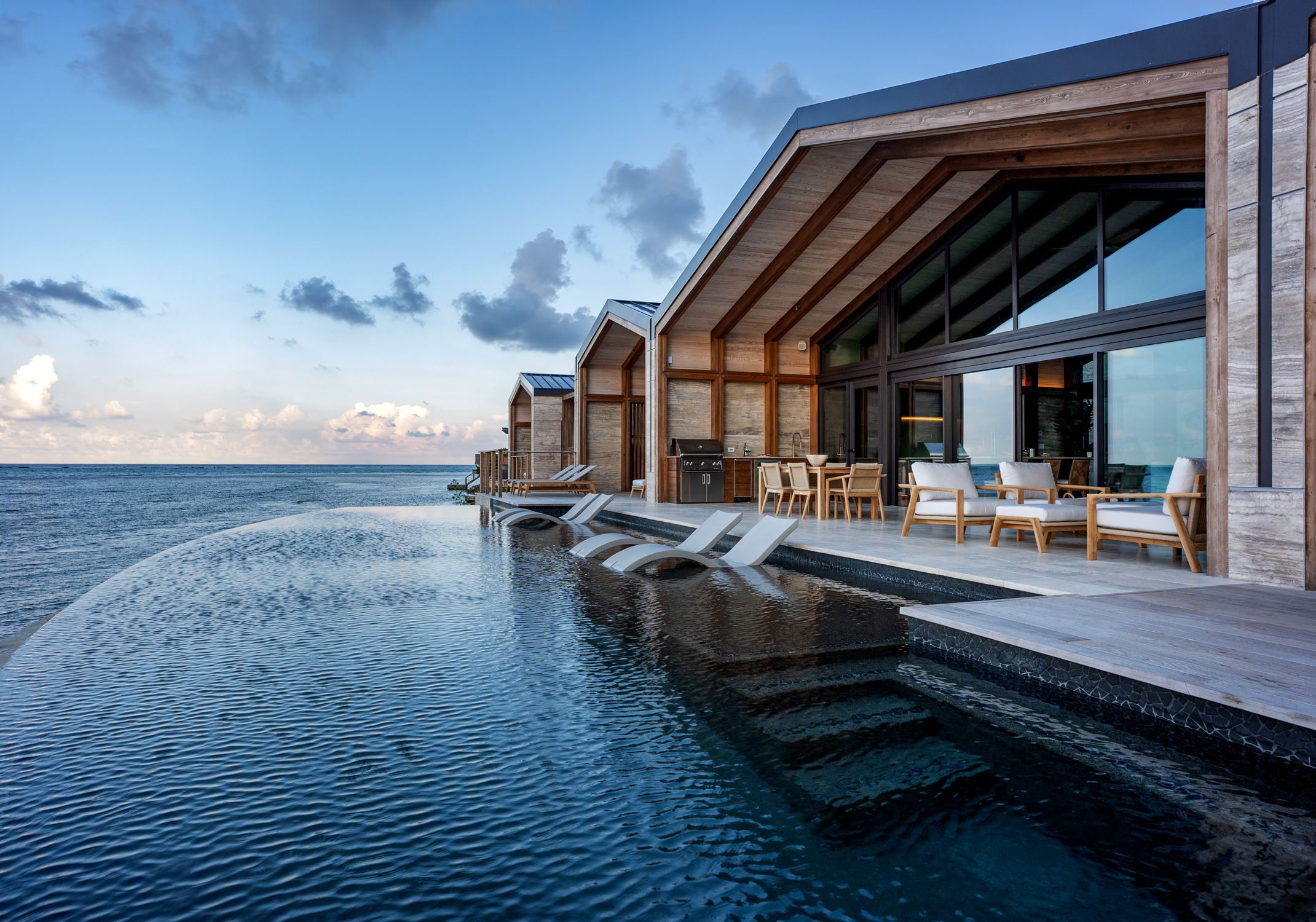
The Beach Club renovation, completed in 2023, is OBMI's most recent work here, its interiors drawn in organic shapes and sweeping curves, with local flora and soft light opening the building to its surroundings. Recognition has come steadily: Best Sustainable Architecture from Virgin Islands Property & Yacht in 2017, and in 2021 both Robb Report's Best of the Best for real estate and a place among the top Caribbean resorts in Condé Nast Traveler's Readers' Choice Awards. The longer measure is continuity: seventeen years with one client on one island, through successive phases and through Hurricane Irma in 2017, after which OBMI helped rebuild a local school.
Awards
- 2025
- Best Private Villa, Quintessa, Caribbean
- 2021
- Robb Report Best of the Best, Real Estate
- Conde Nast Traveler Readers’ Choice Award, Top Resorts Caribbean
- 2017
- Virgin Island Property & Yacht, Best Sustainable Architecture
- Virgin Island Property & Yacht, Stylish Space, The Cliffs Penthouse
- 2012
- Caribbean World Magazine, Super Yacht Marina of the Year, YCCS